ملخص البحث والتطوير التنفيذي: الحقائق العلمية الأساسية
1. "الأساس الحيوي" لا يعني التحلل الطبيعي أو المنزلي التلقائي: يتم تصنيع حمض البوليلاكتيك (PLA) من نشا النباتات المتخمر، لكن تحلله الحيوي يتطلب منشآت تسميد صناعي متخصصة (درجة حرارة مضبوطة بين 55 و60 مئوية، رطوبة محددة، ومجتمع بكتيري نشط). الادعاء بأنه "قابل للتحلل في مياه المحيط" أو "يتحلل تلقائياً في فناء المنزل" يمثل مخالفة تنظيمية جسيمة.
2. يعاني الـ PLA النقي 100% من عائق فيزيائي في امتصاص السوائل: نظراً لأن معدل استعادة الرطوبة القياسي يبلغ 0.4% إلى 0.6% فقط (مقارنة بـ 12% إلى 15% للفيسكوز النباتي الطبيعي)، فإن الـ PLA النقي كاره للماء بطبيعته. لا تستطيع أقمشة الـ PLA النقية امتصاص الانسكابات المائية الكبيرة أو الزيوت الساخنة بشكل فوري.
3. إثباتات مخبرية معتمدة ومكتملة: انتقل تطوير المواد من النماذج النظرية إلى التحقق العملي الصارم. في الاختبارات التي أجرتها مؤسسة TÜV Rheinland (تقرير رقم 244556911a 001)، بلغ معدل التحلل الحيوي الهوائي خلال 179 يوماً 91.29% (مقارنة بالسليلوز)، وأظهرت اختبارات السمية البيئية على محاصيل فول الصويا والذرة كتلة حيوية جافة بلغت 95.8% إلى 100.1% مقارنة بالسماد الشاهد. وفي الوقت ذاته، أكد المركز الوطني الصيني لمراقبة وفحص جودة منتجات البلاستيك في بكين (تقرير رقم 国塑检[2024]C0352) معدل تحلل حيوي نسبي بلغ 94.5% بعد 180 يوماً، مجتازاً بالكامل متطلبات المعيار الصيني الرسمي GB/T 41010-2021 للحصول على علامة "Dual-J" الخضراء للتحلل البيئي.
4. بنية النسيج الهجين من الفيسكوز وحمض البوليلاكتيك (PLA): يوفر الفيسكوز امتصاصاً فائقاً للسوائل عبر الخاصية الشعرية (استرجاع رطوبة يتراوح بين 12% و15%)، لكنه يفقد نحو 50% من متانته الميكانيكية عند البلل التام. في المقابل، يمتلك PLA نسبة استرجاع منخفضة (0.4%) لكنه يحتفظ بكامل متانته في الحالة الرطبة ويمتلك خصائص حمضية ضعيفة طبيعية مثبطة للبكتيريا. إن الجمع بين الاثنين يحقق إنجازاً هندسياً استثنائياً: امتصاص سريع وضخم للسوائل، مقاومة قوية للتمزق أثناء العصر، جفاف سريع بدون روائح عفونة رطبة، وقابلية كاملة للتحلل في التسميد الصناعي بنسبة 100%.
1. معضلة الاستدامة في منسوجات التنظيف التجارية
تواجه مشتريات أقمشة التنظيف التجارية العالمية مأزقاً حرجاً بين اتجاهين غير مستدامين، وسط تشديد العقوبات التنظيمية الدولية:
ألياف الميكروفايبر الاصطناعية التقليدية (بوليستر PET / بولي أميد PA)
مشتقة من النفط غير المتجدد. يُطلق كل غسيل آلي ملايين الجسيمات البلاستيكية الدقيقة غير القابلة للتحلل في النظم البيئية البحرية، مما يعرض العلامات التجارية للضرائب الأوروبية على البلاستيك وحظر معايير المشتريات البيئية ESG.
الفيسكوز القياسي 100% من أصل نباتي (حرير الرايون السليلوزي)
قدرة امتصاص طبيعية فائقة من سليلوز الخشب. ومع ذلك، يفقد الفيسكوز حوالي 35% من قوة الشد عند التشبع بالماء، ويتشوه بسهولة مع العصر المتكرر، فضلاً عن تراكم الروائح الكريهة عند بطء الجفاف.
2. تصنيف المواد: مصفوفة الأرباع الأربعة القياسية للبلاستيك الحيوي الأوروبي
لتلبية متطلبات تدقيق الامتثال المؤسسي، يجب تصنيف مصادر المواد وطرق التخلص منها بدقة وفق النموذج القياسي المعتمد من الرابطة الأوروبية للبلاستيك الحيوي (European Bioplastics):
كما هو موضح أعلاه، يحتل حمض البوليلاكتيك (PLA) الربع الأول (أعلى اليمين: أساس حيوي وقابل للتسميد الصناعي). تنشأ موارده الكربونية من محاصيل زراعية سنوية متجددة بدلاً من النفط الخام الأحفوري.
في المقابل، فإن بوليمرات الربع الثاني (Bio-PET، Bio-PE) تُصنع من النباتات لكنها تشترك في نفس التركيب الكيميائي غير القابل للتحلل للبلاستيك التقليدي، وتستمر في نشر الجسيمات البلاستيكية الدقيقة أثناء الغسيل.
3. الديناميكا الفيزيائية: الهندسة التكاملية لألياف الفيسكوز وحمض البوليلاكتيك (PLA)
في منسوجات المسح التجارية، لا يمكن لخيط أحادي منفرد أن يحل بالتوازي معضلات الامتصاص اللحظي الفائق، ومقاومة التمزق عند العصر الرطب، والجفاف السريع بدون روائح بكتيرية، والتحلل السمادي الكامل الخالي من البلاستيك. تكشف المقارنة المجهرية والميكانيكية أن الفيسكوز وPLA يمتلكان خصائص تكاملية متطابقة:
| المعيار الهندسي الأساسي | 100% فيسكوز نباتي (رايون) | 100% حمض بوليلاكتيك (ألياف ذرة PLA) | قماش هجين محبوك من الفيسكوز / PLA |
|---|---|---|---|
| مصدر المادة الخام والتصنيف | سليلوز مجدد من لب الخشب أو زغب القطن | بوليستر حيوي مخمر من نشا الذرة أو الكسافا | 100% مصادر نباتية متجددة سنوياً |
| نسبة استرجاع الرطوبة القياسية | 12% ~ 15% (شديد الألفة للماء، امتصاص لحظي) | حوالي 0.4% (طرد سريع للرطوبة، سعة احتجاز منخفضة) | يعمل الفيسكوز كنواة ماصة لامتصاص فوري وكبير للسوائل |
| متانة الشد في الحالة الرطبة | تنخفض بشدة بنحو 50% عند التشبع التام بالماء | مستقرة للغاية؛ قوة الشد الرطب تعادل القوة الجافة | يوفر PLA هيكلاً داعماً قوياً يقاوم التمزق عند العصر القوي |
| مقاومة التجعد وثبات الأبعاد | مرونة ضعيفة، قابل للتجعد، انكماش بالغسيل حتى 10% | استعادة مرنة ممتازة، مقاوم للتجعد، انكماش طفيف للغاية | يحافظ على أبعاده الهندسية المستطيلة لأكثر من 25 غسلة |
| حموضة السطح والخصائص الوظيفية | محايد؛ التخزين الرطب يسبب نمو العفن والروائح الكريهة | حمضي ضعيف طبيعياً؛ مثبط ذاتي للبكتيريا ومقاوم للعث | يثبط التخمر البكتيري الحامضي طبيعياً ويمنع روائح العفونة |
| عتبة الغسيل الحراري والصيانة | تحمل حراري جيد؛ يتحمل الغليان والماء الساخن | نقطة الانصهار ~150 مئوية؛ حساس للحرارة العالية | إرشادات العناية: غسيل في الغسالة بماء بارد أقل من 40 مئوية |
| اعتماد التحلل في التسميد الصناعي | تحلل طبيعي بطيء للسليلوز الخام | معدل التحلل السمادي خلال 180 يوماً: 91% ~ 94.5% | مطابق لمعايير EN 13432 و ASTM D6400 و GB/T 41010 |
★ المنطق الهندسي: الحل التجاري النهائي الخالي تماماً من البلاستيك
يؤدي استخدام PLA النقي بنسبة 100% في أقمشة المطبخ إلى تأخر الترطيب السطحي الأولي بسبب معدل استرجاع الرطوبة المنخفض (0.4%). وعلى العكس من ذلك، يؤدي استخدام الفيسكوز النقي 100% إلى تمزق القماش بسهولة عند عصره بقوة وتكوين روائح رطوبة حامضية عند تجفيفه ببطء في الأماكن المغلقة.
من خلال الدمج عبر الحياكة الدائرية بين ألياف الفيسكوز (نواة الامتصاص الشعري فائق السعة) وخيوط PLA (الهيكل الداعم المتين والسطح المضاد للبكتيريا)، تقدم WonderCloth: امتصاصاً فورياً للسوائل المسكوبة، وقوة تحمل عالية عند العصر الرطب، وجفافاً سريعاً خالياً من الروائح، وتحللاً سمادياً كاملاً خلال 180 يوماً.
4. دورة الحياة الدائرية المستدامة والمغلقة: من النشا إلى التسميد الصناعي
تستند الميزة البيئية الحقيقية لألياف PLA إلى بنية إعادة تدوير الكربون في دورة مغلقة تماماً:
5. نتائج الاختبارات المعملية المعتمدة: حركية التحلل السمادي خلال 180 يوماً والسمية النباتية الصفرية
بالنسبة لسلاسل المتاجر الكبرى والماركات العالمية، تشكل الادعاءات البيئية غير الموثقة مخاطر قانونية وتنظيمية جسيمة. قامت WonderCloth، بالتعاون الهندسي مع معهد Wuxi-Nanda للمواد الصديقة للبيئة، بتكليف مؤسسة TÜV Rheinland والمركز الوطني الصيني لمراقبة وفحص جودة منتجات البلاستيك (بكين) بإجراء اختبارات شاملة للتحلل السمادي الهوائي والسمية البيئية. فيما يلي البيانات الرسمية المؤكدة:
تقرير اختبار التحلل في التسميد الصناعي من TÜV Rheinland
معايير الفحص المعتمدة: ISO 14855-1: 2012 / ASTM D5338-15 / EN 13432: 2000 / ASTM D6400-23
تم تقييم متبقيات السماد على محاصيل فول الصويا والذرة بتركيزي 25% و50%. وبلغ متوسط معدل الإنبات 98.6%–98.9%؛ وحققت الكتلة الحيوية الجافة 95.8%–100.1% مقارنة بالسماد الشاهد. ولم تظهر على الشتلات أي أعراض اصفرار أو تنخر أو تشوهات مورفولوجية، مما يثبت أمانها التام بنسبة 100% لتغذية التربة الزراعية.
المركز الوطني لمراقبة وفحص جودة منتجات البلاستيك (بكين)
المعيار المعتمد: GB/T 41010-2021 (المعيار الوطني الصيني للبلاستيك القابل للتحلل الحيوي)
بناءً على التقييم الشامل بموجب المعيار GB/T 41010-2021، استوفت المادة المفحوصة كافة متطلبات الحصول على علامة "Dual-J" المعتمدة للبلاستيك القابل للتحلل، مما يمنحها الأهلية الرسمية للمناقصات الحكومية والمشتريات المؤسسية المستدامة.
الملحق: مصفوفة معايير الجودة الفيزيائية للمنتجات التامة في المصنع (8 أبعاد)
6 إلى 8 أضعاف الوزن الذاتي
تجفيف أسرع بنسبة +40%
تنظيف ذاتي بالماء الجاري
احتفاظ بالقوة بنسبة >85%
انكماش <5% بعد الغسيل
غسيل آلي تحت 40 مئوية
لا رائحة رطوبة خلال 48 ساعة
مطابق لـ REACH / OEKO-100 وخالٍ من PFAS
6. معرض تقارير الاختبار المعتمدة وإرشادات تدقيق المشتريات (مكافحة الغسل الأخضر)
بالنسبة لمشتري سلاسل التجزئة الكبرى والشركات الدولية، يجب أن تكون الادعاءات التسويقية البيئية مدعومة بوثائق فحص معملية أصلية. نعرض أدناه مقتطفات من تقارير الفحص الرسمية (نسخ تقنية للمعاينة تحمل علامات مائية):
معرض تقارير الفحص الصادرة عن مختبرات معتمدة (مقتطفات للمعاينة الفنية)
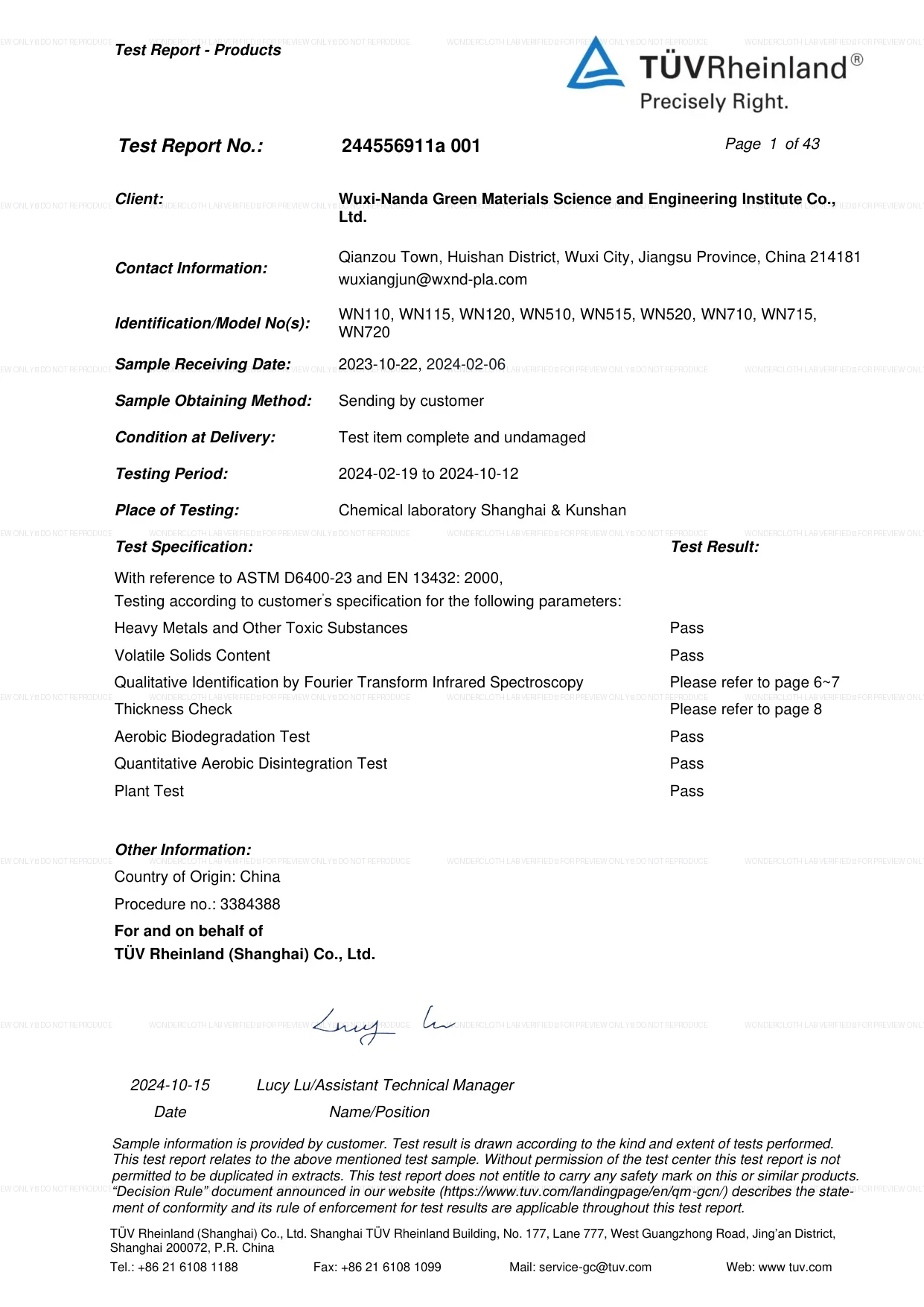 TÜV Rheinland
تقرير رقم 244556911a 001 وفق معايير EN 13432 و ASTM D6400؛ اجتياز المعايير الخمسة مع الأختام الرسمية.
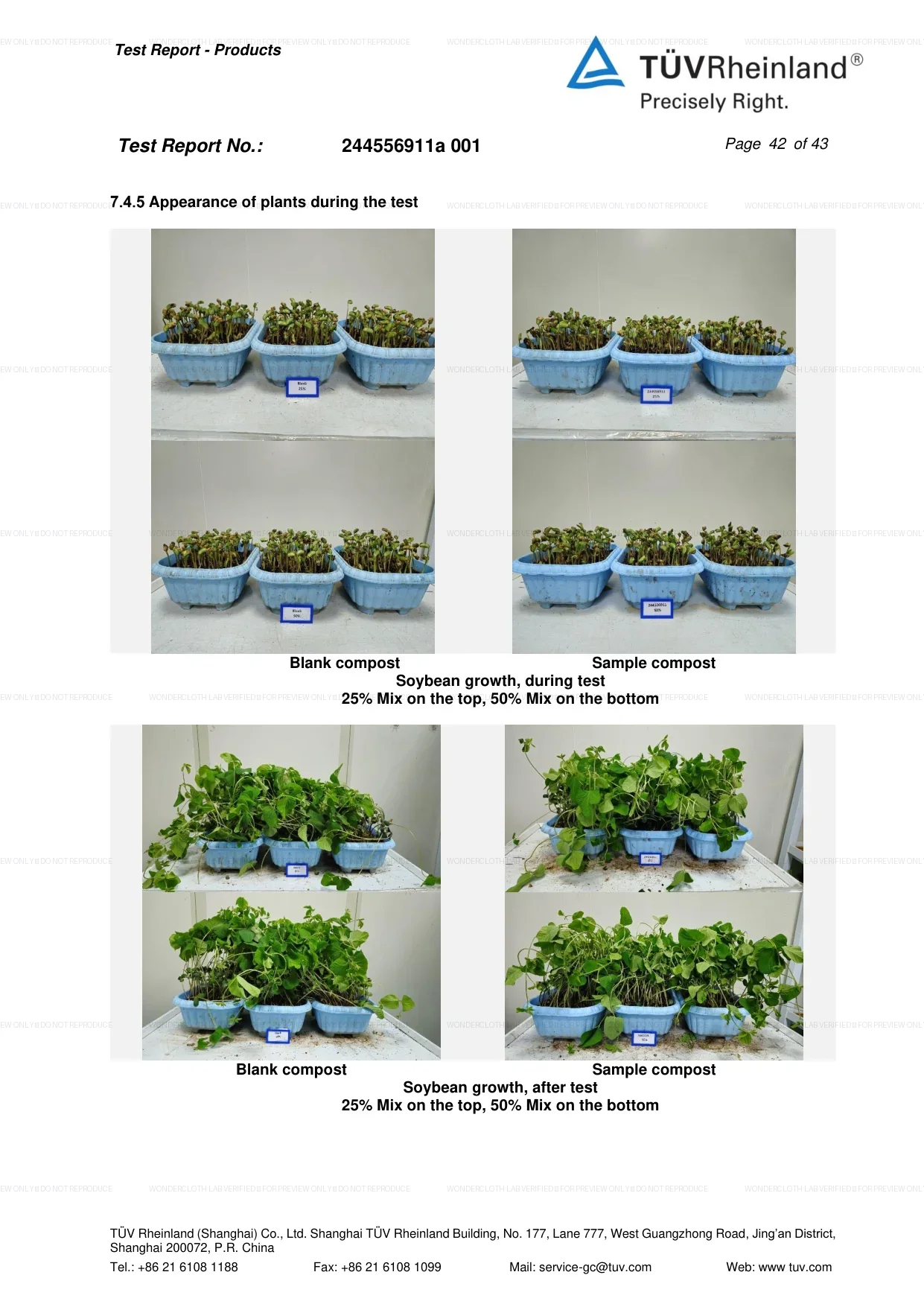 السمية النباتية
صورة فوتوغرافية حقيقية من الصفحة 16 للتقرير: إنبات بنسبة 98.9% وكتلة حيوية 100.1% تؤكد أمان التربة.
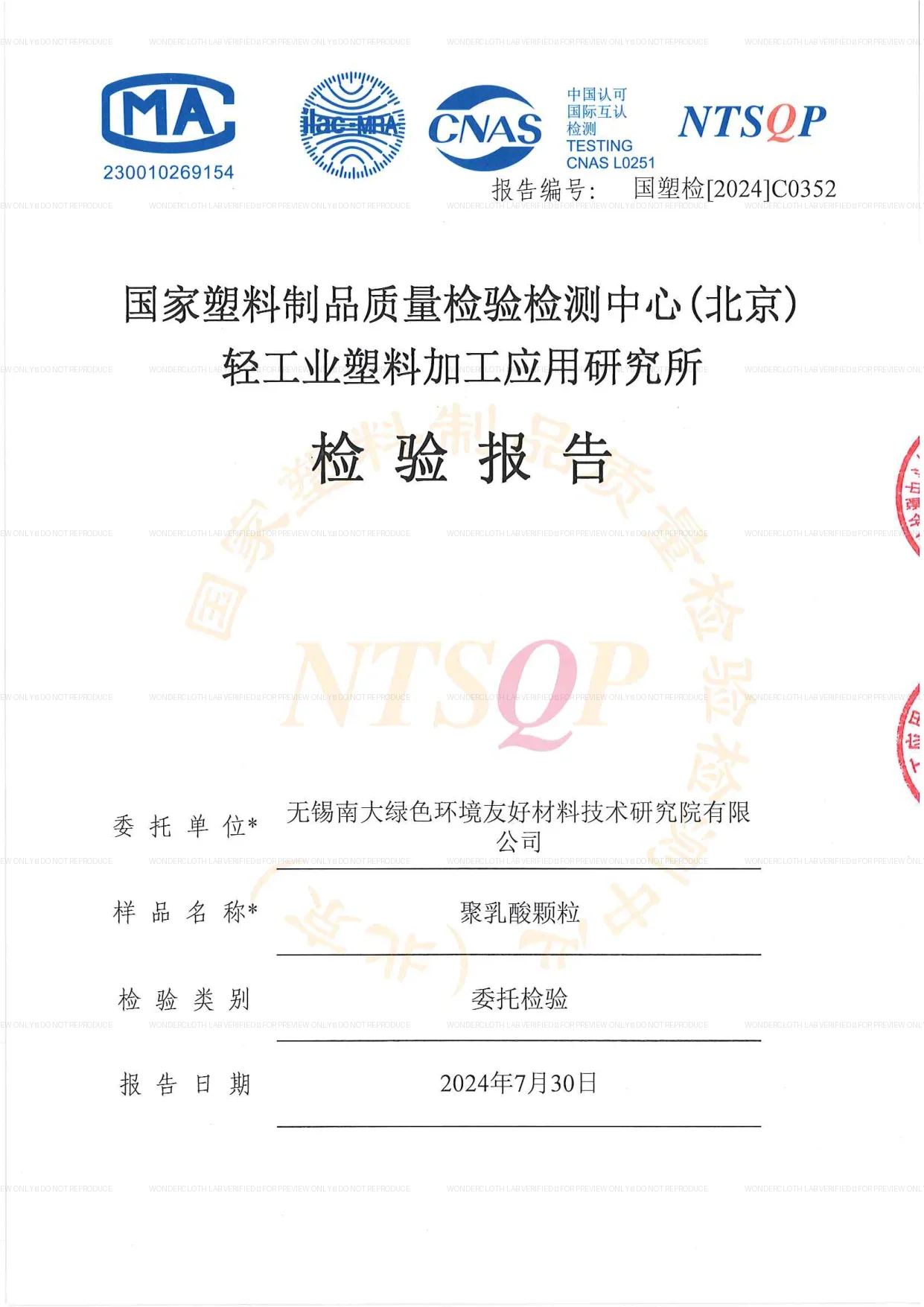 اعتماد CMA و CNAS
تقرير رقم 国塑检[2024]C0352 يحمل الاعتماد القانوني CMA والاعتراف الدولي بمختبرات CNAS.
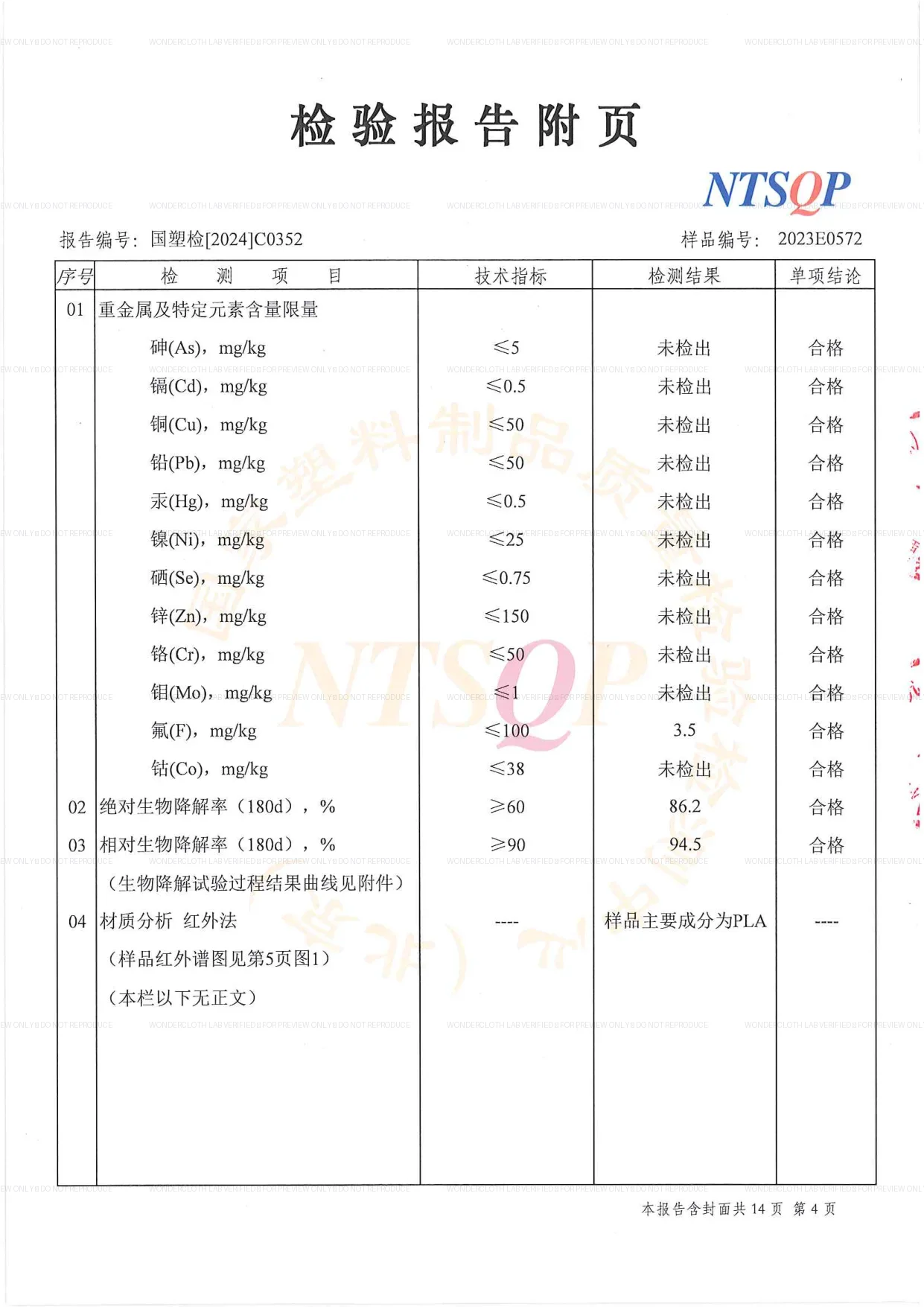 بيانات التحلل Dual-J
180 يوماً: تحلل مطلق 86.2% ونسبي 94.5%، مطيافية FTIR تؤكد نقاء PLA، والمعادن الثقيلة ضمن الحدود الآمنة.
الامتثال القانوني الدولي وتجنب عقوبات الغسل الأخضر
بموجب توجيهات الادعاءات الخضراء للاتحاد الأوروبي وإرشادات FTC الأمريكية، يجب أن تلتزم العبارات التسويقية بدقة متناهية:
✓ ادعاءات تسويقية مسموح بها ومثبتة قانونياً
- • «مصنوع من PLA نباتي وفيسكوز عالي الامتصاص» (توضيح شفاف ومطابق للحقيقة لمصدر الألياف)
- • «صفر ميكروبلاستيك اصطناعي أحفوري» (لا يُطلق أي ألياف بتروكيماوية غير قابلة للتحلل)
- • «حياكة تريكو مضلعة لتعزيز الفرك الميكانيكي للأسطح» (خاصية فيزيائية ناتجة عن بنية الحلقات المحبوكة)
- • «بنية سريعة الجفاف تحد من روائح الرطوبة والكمكمة» (تشتيت فيزيائي مؤكد للرطوبة)
- • «قابل للتسميد الصناعي في المنشآت المعتمدة» (يُسمح به فقط عند حصول المنتج النهائي الكامل على الشهادة)
✗ ادعاءات مضللة عالية المخاطر تنطوي على غسل أخضر (يجب تجنبها)
- •
«قابل للتحلل الطبيعي في البيئة بنسبة 100%»(ادعاء باطل: PLA لا يتحلل في الغابات أو التربة العادية) - •
«آمن على المحيطات وقابل للتحلل البحري»(مياه البحار الباردة تفتقر إلى حرارة 55 مئوية اللازمة لتحلل PLA) - •
«مضاد للبكتيريا طبيعياً دون اختبارات»(غير قانوني دون تقارير فحص معتمدة وفق ISO 20743) - •
«خالٍ من البلاستيك (Plastic-Free)»(وفق لوائح البلاستيك أحادي الاستخدام الأوروبية، تظل البوليمرات مصنفة كبلاستيك)
استفسارات تقنية حول منسوجات التنظيف المستدامة المصنوعة من PLA
تواصل شركة وشي جيالي للمنسوجات المحدودة استكشاف آفاق التقنية في أقمشة التنظيف النباتية والقابلة للتسميد. نرحب بالاستفسارات الفنية والحوار الهندسي مع العلامات التجارية العالمية، الموزعين، والباحثين في مجال الاستدامة.