Executive R&D Summary: Core Scientific Facts
1. "Bio-based" is not equal to home or nature biodegradation: Polylactic Acid (PLA) is synthesized from fermented plant starch, but decomposition requires dedicated industrial composting facilities (55–60°C controlled temperature, humidity, and microbial flora). Claims of "ocean degradable" or "backyard biodegradable" represent severe regulatory non-compliance.
2. 100% Pure PLA suffers an intrinsic water absorption bottleneck: With a standard moisture regain of only 0.4%–0.6% (compared to 12%–15% for plant-based viscose), pure PLA is inherently hydrophobic. Pure PLA wipes cannot instantly suck up large spills or hot grease.
3. Strategic Middle-to-Long-Term R&D Horizon: PLA's core commercial strength is not raw water suction, but "Plant-Based Origin + Fast Air-Drying + High Wet Dimensional Stability". Engineered hybrid blends with absorbent plant viscose eliminate fossil synthetic microplastics while maintaining wiping performance.
1. The Sustainability Dilemma in Commercial Cleaning Textiles
Global commercial wiping procurement is trapped between two unsustainable extremes, facing mounting international compliance penalties:
Traditional Synthetic Microfiber (Polyester PET / Polyamide PA)
Derived from non-renewable petroleum. Each machine wash sheds millions of persistent synthetic microfibers into marine ecosystems, facing upcoming EU plastic taxes and institutional ESG bans.
Standard 100% Plant-Based Viscose / Rayon
Exceptional natural absorbency from wood cellulose. However, viscose loses ~35% tensile strength when wet, deforming easily after repeated wringing and harboring damp mildew odors if air-drying is slow.
2. Material Taxonomy: European Bioplastics Standard 4-Quadrant Matrix
To satisfy institutional compliance audits, material origins and end-of-life disposal must be mapped strictly according to the European Bioplastics standard model:
As shown above, PLA (Polylactic Acid) occupies the coveted Quadrant 1 (Top-Right: Bio-based & Industrially Compostable). Its carbon feedstock originates from annual agricultural crops rather than fossil crude oil.
In contrast, Quadrant 2 polymers (Bio-PET, Bio-PE) are synthesized from plants but share the exact non-biodegradable chemistry of conventional plastics, still shedding persistent microplastics.
3. Physical Dynamics: Complementary Engineering of Viscose & PLA Fibers
In commercial wiping textiles, no single monofilament can simultaneously solve instant high fluid retention, wet mechanical tear resilience, rapid odor-free drying, and certified industrial compostability. Microscopic and mechanical comparative benchmarks reveal that Viscose and PLA possess precise complementary dynamics:
| Key Engineering Metric | 100% Plant Viscose (Rayon) | 100% Polylactic Acid (PLA Corn Fiber) | Viscose / PLA Hybrid Knitted Cloth |
|---|---|---|---|
| Feedstock & Category | Natural wood pulp/cotton regenerated cellulose | Fermented corn/cassava starch bio-polyester | 100% annual renewable plant origins |
| Standard Moisture Regain Rate | 12% ~ 15% (High hydrophilic capillary draw) | ~0.4% (Quick-dry wicking, small fluid capacity) | Viscose acts as absorbent core for instant suction |
| Wet Tensile Tenacity | Drops sharply by ~50% when fully saturated | Extremely stable; wet strength equals dry strength | PLA provides non-deforming structural spine |
| Crease Recovery & Shape Retention | Low elasticity, wrinkles easily, ~10% wash shrinkage | High elastic recovery, wrinkle-resistant, minimal shrinkage | Retains rectangular shape across 25+ wash cycles |
| Surface Acidity & Functional Properties | Neutral pH; wet storage can cultivate damp sour odors | Natural weak acidity; inherent bacteriostatic & anti-mite | Suppresses sour bacterial fermentation naturally |
| Thermal Laundering Threshold | Good heat tolerance; withstands boiling water | Melting point ~150°C; heat-sensitive at high temps | Care label specified: Machine wash cold <40°C |
| Certified Industrial Composting | Slow ambient cellulose decomposition | 180-day industrial composting rate: 91% ~ 94.5% | Compliant with EN 13432, ASTM D6400 & GB/T 41010 |
★ Engineering Rationale: The Ultimate Zero-Plastic Commercial Solution
Using 100% pure PLA in kitchen cloths results in delayed initial surface wetting due to its 0.4% moisture regain rate. Conversely, using 100% pure viscose causes cloths to rip easily when wrung vigorously and risk persistent sour mildew when air-dried slowly indoors.
By combining viscose staple (high-fluid capillary capture) with PLA filament/staple (resilient non-deforming wet spine and bacteriostatic surface) in a dual-face circular knit or waffle pattern, WonderCloth delivers: instant heavy absorption, high wet wring durability, rapid odor-free drying, and certified 180-day composting.
4. Closed-Loop Sustainable Lifecycle: From Starch to Industrial Composting
The genuine ecological merit of PLA rests on its closed-loop carbon recycling architecture:
5. Certified Laboratory Experimental Verification: 180-Day Composting Kinetics & Zero Phytotoxicity Data
For retail supermarket chains and brand owners, unverified sustainability claims represent acute legal liabilities. WonderCloth, in engineering partnership with Wuxi-Nanda Green Materials Institute, commissioned TÜV Rheinland and the National Quality Supervision and Inspection Center for Plastic Products (Beijing) to execute comprehensive aerobic composting and ecotoxicity testing. Official verified benchmarks are disclosed below:
TÜV Rheinland Composting Test Report
Standards: ISO 14855-1: 2012 / ASTM D5338-15 / EN 13432: 2000 / ASTM D6400-23
Compost residue evaluated on Soybean and Corn crops in 25% and 50% mixtures. Mean germination achieved 98.6%–98.9%; mean dry biomass reached 95.8%–100.1% of blank compost. Seedlings exhibited zero chlorosis, necrosis, or morphology defects, verifying 100% agricultural soil enrichment safety.
National Plastics Testing Center (Beijing)
Benchmark: GB/T 41010-2021 (Official Chinese Dual-J Eco-Label Standard)
Under GB/T 41010-2021 evaluation, the tested resin achieved complete qualification for China's prestigious "Dual-J" biodegradable plastic emblem, granting authorized green procurement clearance across enterprise and municipal tenders.
Appendix: Factory Finished Goods Physical Quality Benchmark Matrix
6x–8x self-weight
40%+ faster air-drying
Sheds clean under water
>85% retention under pull
Shrinkage <5% post wash
Machine wash cool <40°C
No sour damp odor in 48h
REACH / OEKO-100 zero PFAS
6. Certified Lab Reports Gallery & Anti-Greenwashing Buyer Guidelines
For retail supermarket chains (Walmart, Costco, Target, Lidl) and multinational brand procurement, sustainability marketing must be supported by certified laboratory records. Below are redacted excerpts from official test reports conducted with Wuxi-Nanda Green Materials Institute:
Laboratory Test Report Gallery (Redacted for Technical Preview)
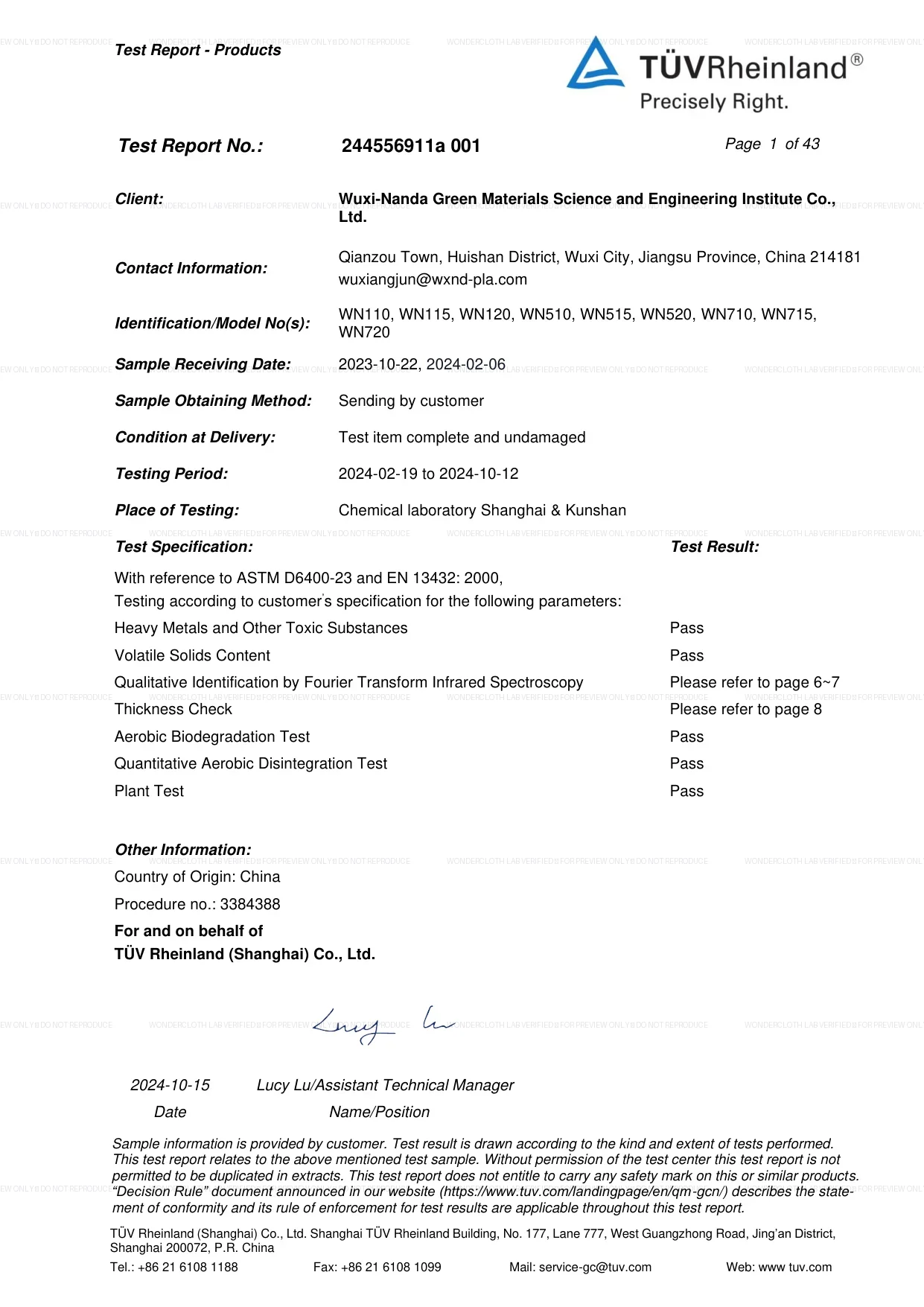 TÜV Rheinland
EN 13432 & ASTM D6400 certified; all 5 testing criteria passed with full stamps.
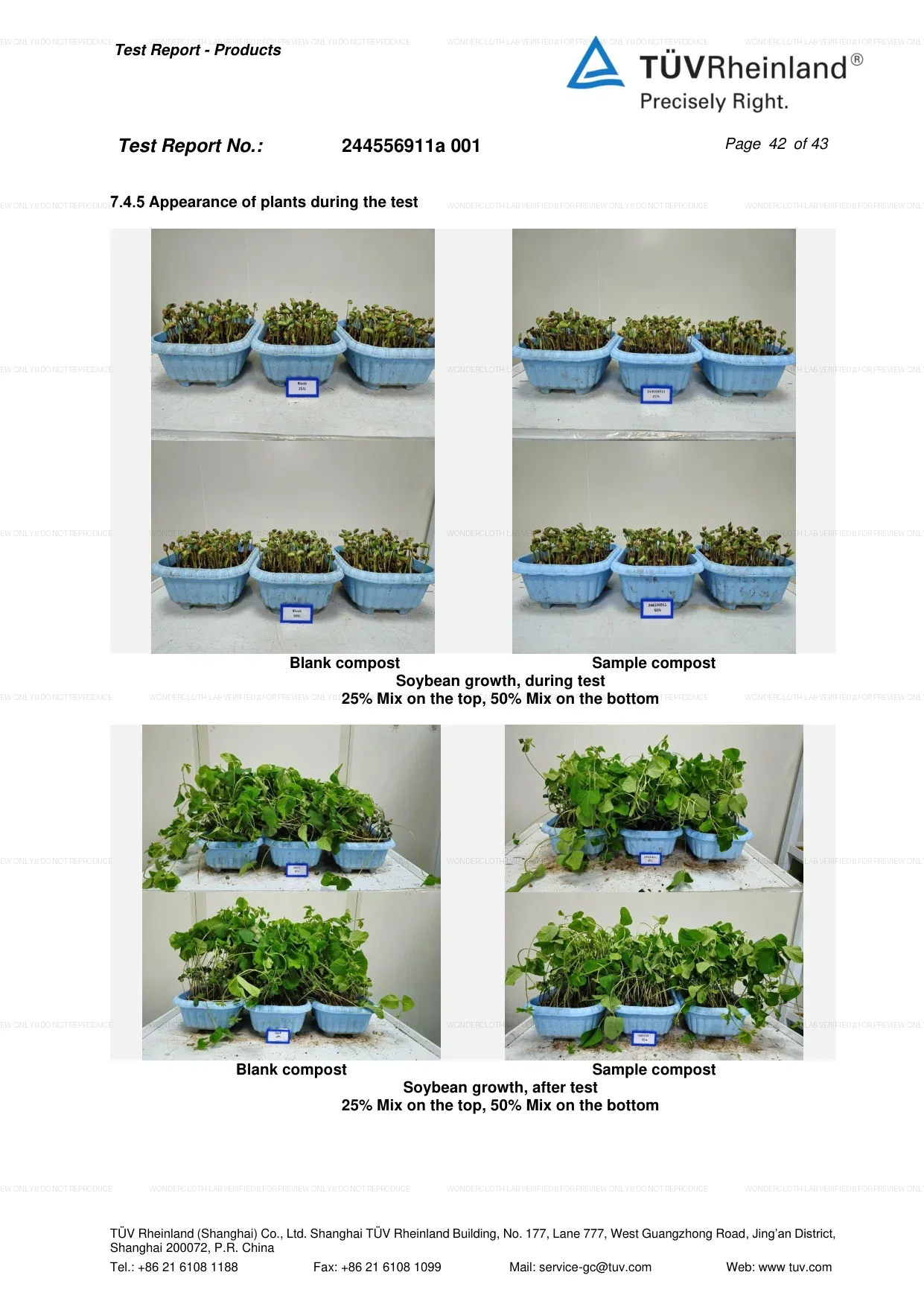 Plant Ecotoxicity
Actual seedling growth photos in compost: 98.9% germination, 100% soil safe.
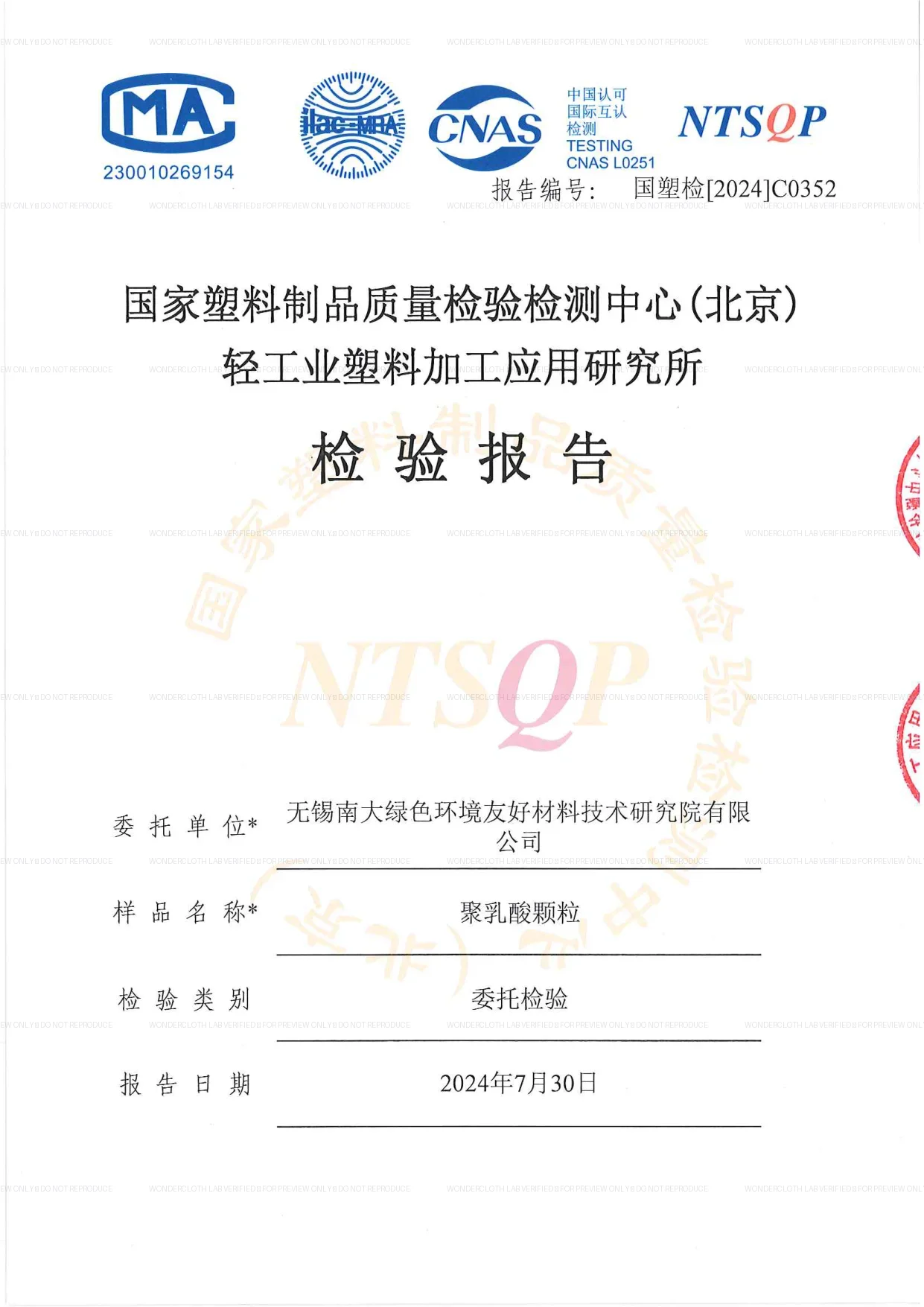 CMA · CNAS Certified
Report No. 国塑检[2024]C0352 with official CMA qualification and international CNAS accreditation.
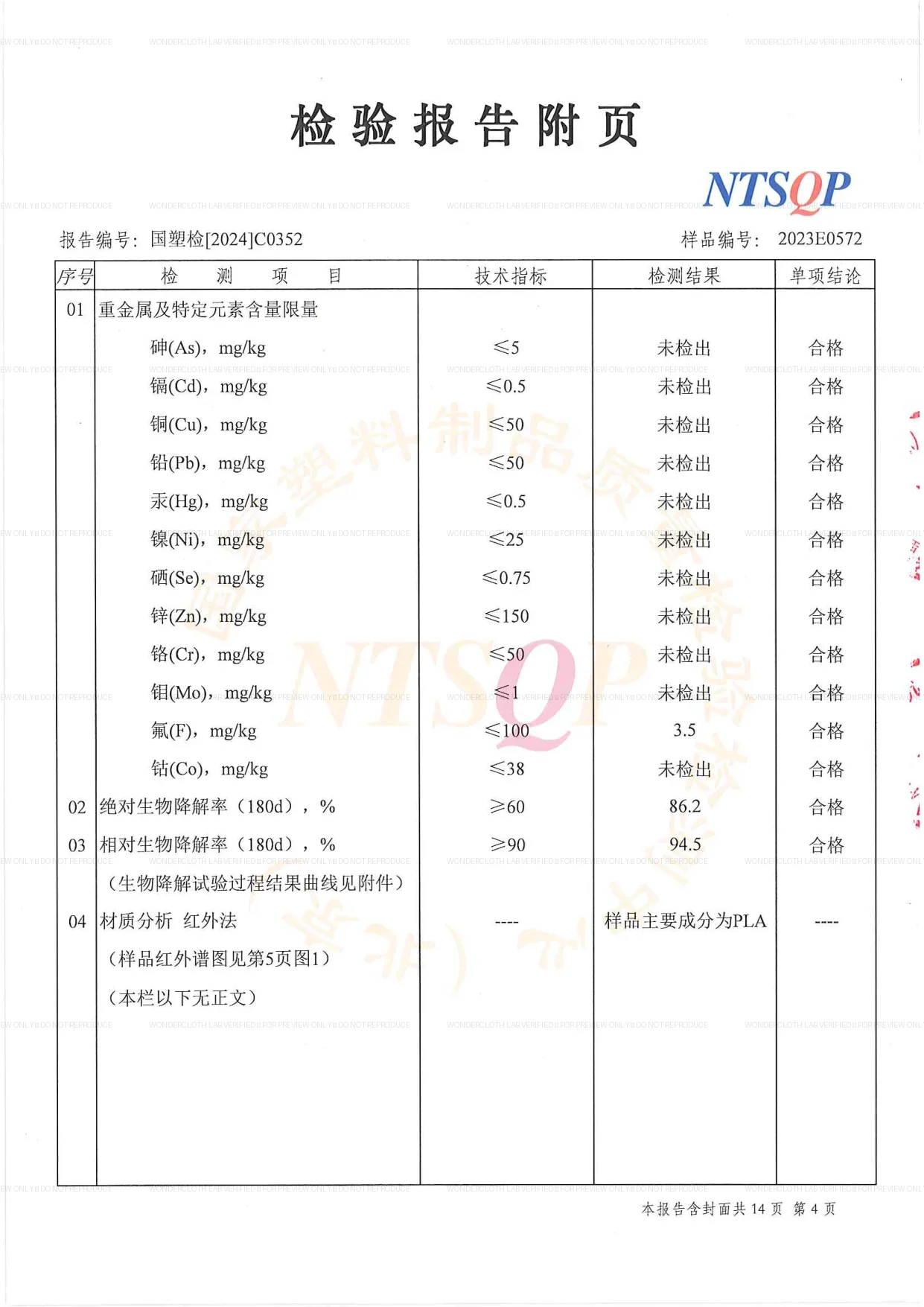 GB/T 41010 Dual-J
180d absolute rate 86.2%, relative rate 94.5%, FTIR pure PLA, heavy metals compliant.
International Retail Compliance & Anti-Greenwashing Boundaries
Under the European Union Green Claims Directive and US FTC Green Guides, marketing claims must maintain strict factual integrity:
✓ Permitted & Legally Defensible Marketing Claims
- • "Made with Plant-Based PLA and Absorbent Viscose" (Factually transparent fiber origin)
- • "Zero Synthetic Fossil Microplastics" (No non-biodegradable petrochemical fibers shed)
- • "Textured Knit for Enhanced Surface Scrubbing" (Physical loop engineering)
- • "Quick-Drying Architecture Reduces Damp Odors" (Physical moisture dispersion)
- • "Industrially Compostable under Certified Facilities" (When full finished good is certified)
✗ Prohibited & High-Risk Greenwashing Statements (AVOID)
- •
"100% Naturally Degradable in Nature"(False: PLA does not rot in ambient forests or backyards) - •
"Ocean Degradable / Marine Safe"(Cold ocean water lacks the 55°C heat for PLA hydrolysis) - •
"Naturally Antibacterial without Testing"(Illegal without certified ISO 20743 lab reports) - •
"Plastic-Free"(Under EU single-use plastic rules, synthetic polyesters remain polymers)
Technical Inquiries Regarding Sustainable PLA Cleaning Textiles
Wuxi Jiali Textile Commodity Co., Ltd. continuously evaluates the technological frontier of plant-based and compostable cleaning textiles. We welcome technical inquiries and engineering dialogue with global retail brands, distributors, and sustainability researchers.