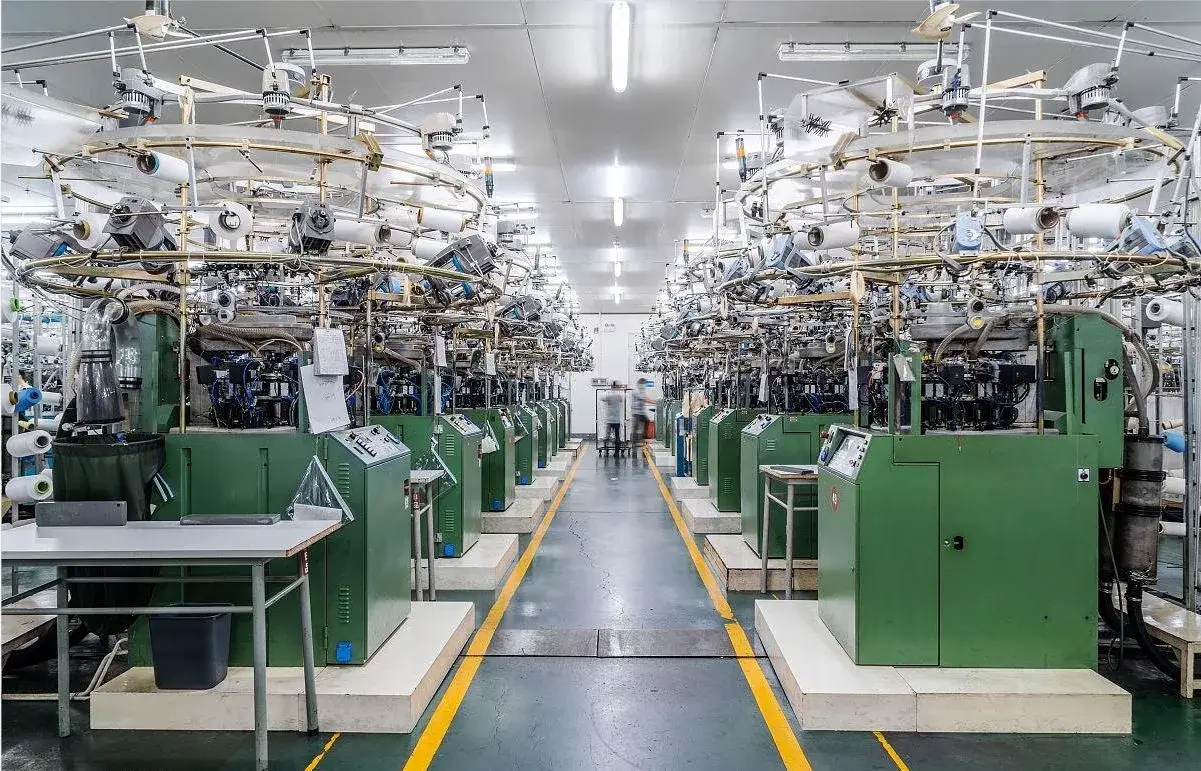
The Fractured Supply Chain Dilemma vs. Full-Vertical Integration
In traditional B2B textile sourcing, international buyers frequently encounter fragmented supply chains where production is split across multiple uncoordinated entities: raw greige knitting mills, external commission dye-houses, third-party cut-and-sew workshops, and separate packaging printers. This multi-vendor handoff introduces critical points of failure:
Typical Fractured Supply Chain
- Inflated MOQs: Dye houses require massive batch sizes (ton-scale) before accepting custom color runs.
- Uncontrolled Color Deviation: Dye-lot variance and metamerism between production batches lead to rejected shipments.
- Tactile Inflexibility: Cut-and-sew workshops cannot adjust ground mesh firmness or pile height because fabric is bought off-the-shelf.
- Finger-Pointing Quality Control: When edge unraveling or needle contamination occurs, converters blame the knitting mill.
WonderCloth Vertical Integration
- Single-Campus Accountability: Weaving, dyeing, finishing, converting, embroidery, and packaging managed under one ISO-certified roof.
- Agile Customization: Adjust yarn blend, pile height, and Pantone shade without multi-vendor markup.
- Precision Tactile Tuning: Independent control of base mesh rigidity and functional loop softness.
- Guaranteed Compliance: 100% in-house JIS conveyor needle detection (Fe φ0.8mm) and CNAS zero-formaldehyde verification.